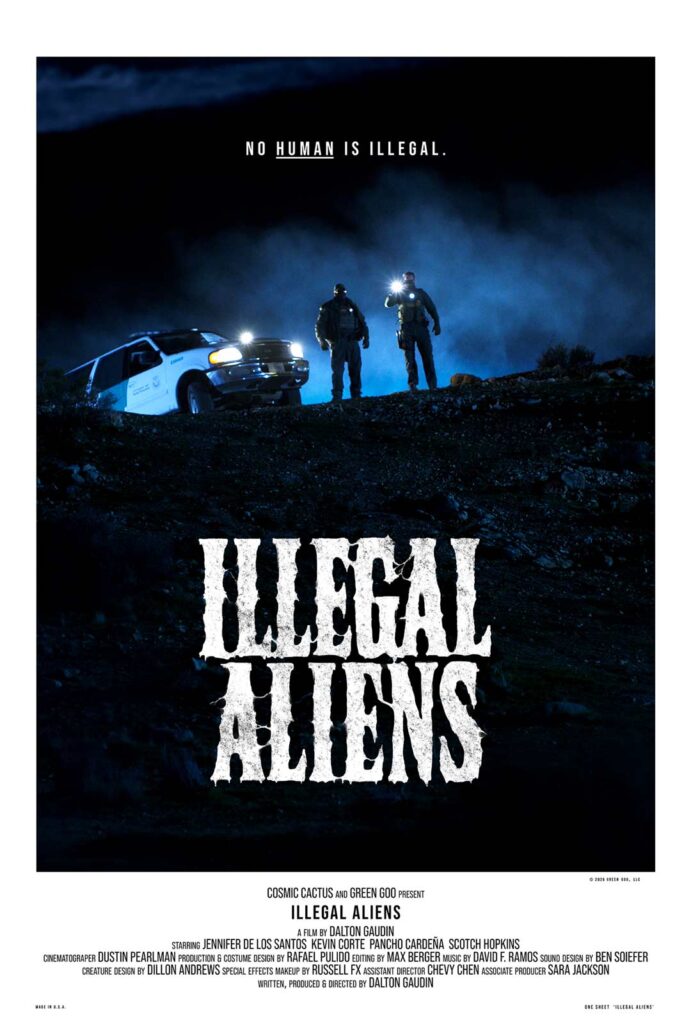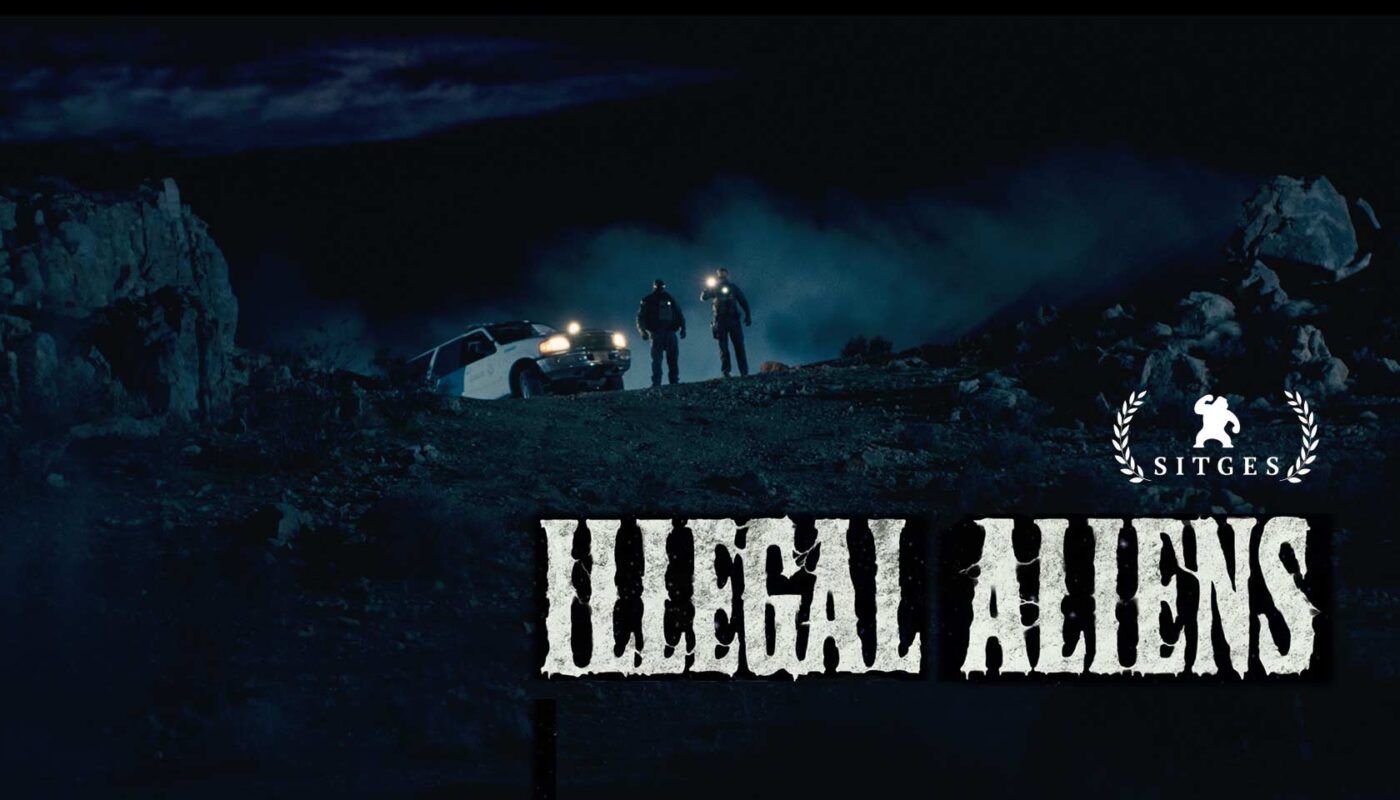
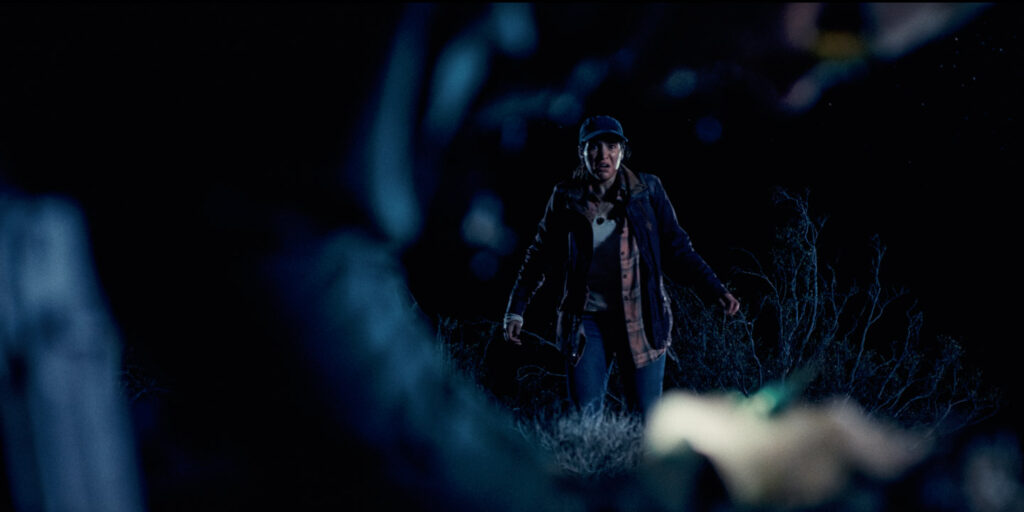
Illegal Aliens aka La Frontera is a creature-horror short film that raises topical questions about who is considered alien on American soil when a group of immigrants led by their coyote encounter what initially appear to be U.S. Border Patrol agents. To generate interest in the feature, Writer/Director Dalton Gaudin crafted this taut proof of concept.
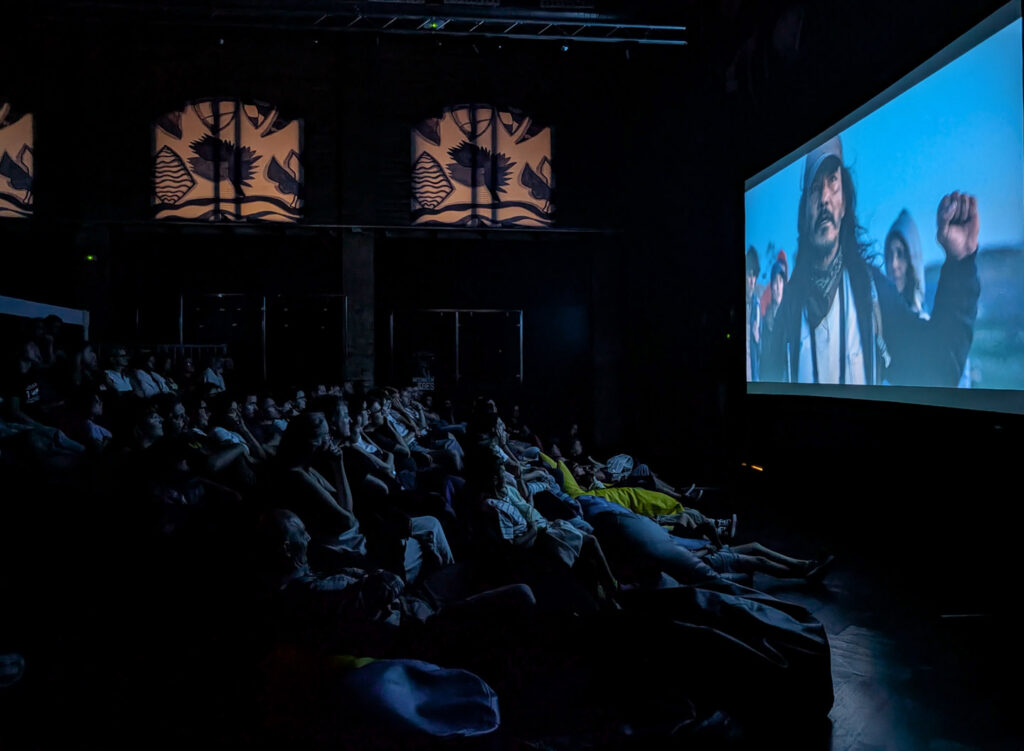
We were honored to have our estrena mundial (world premiere) at the prestigious 59th Annual Sitges International Film Festival in front of a sold out audience in the Sitges Family – Teen Section on October 10, 2026 at 7pm. Tickets for October 15th at 8pm are still available here for 5 €.
How It Started
I can’t recall the first time I met Dalton, but he has been dating one of my good friends for almost 6 years. When Sara Jackson first mentioned that she met an interesting filmmaker on the apps, I had no idea that we would all collaborate on a thrilling project several years later. Dalton first mentioned the concept behind Illegal Aliens a long time ago, but these things can take time.
After a lengthy prep, we returned to Lancaster on January 24, 2026 for our first of two nights shooting. The three of us narrowed the field of possible locations from 3 down to 1 on November 8, 2025. Turrentine Studios worked perfectly as a stand-in to the US-Mexico border.
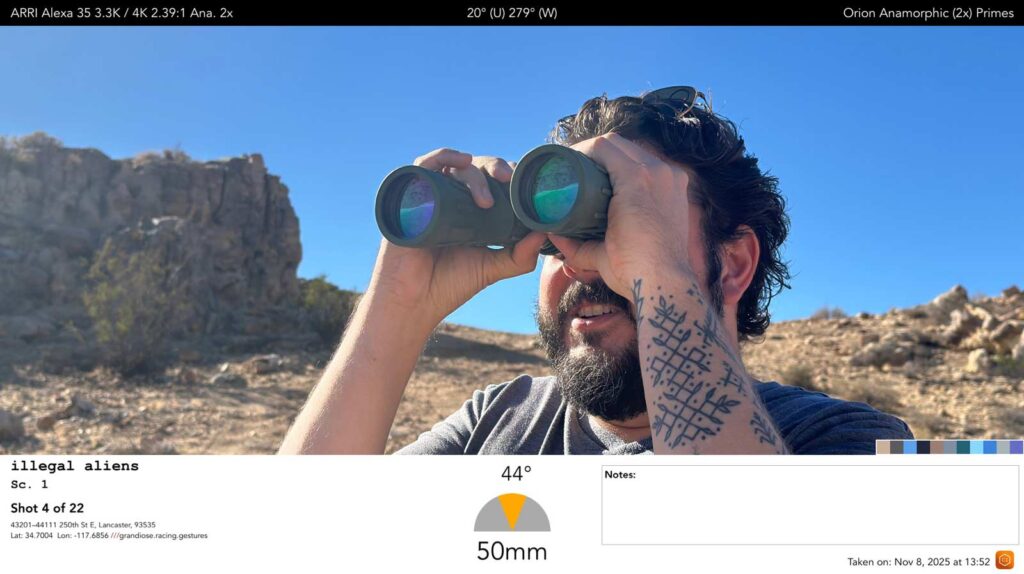
The logistics of shooting at night so far out of the production zone required costly and time consuming solutions. Our 1st AD, Chevy K. Chen, who is an old friend of Dalton’s and an experienced producer famously asked if the location was so amazing that it justified forcing us to shoot at night all the way out in Lancaster?
The Nighttime Is the Right Time
I too struggled with that question. Yes, we found a great hill to utilize, but if we couldn’t sense the desolate landscape surrounding it, then shouldn’t we find something more convenient? I should clarify that Chevy posed this on our tech scout and—with 12 days before principal photography—there was little time or motivation to actually pivot. Dalton spent a lot of time finding our ideal spot. It just happened to be 90 miles/90-minute drive without any traffic from my home in Silver Lake.
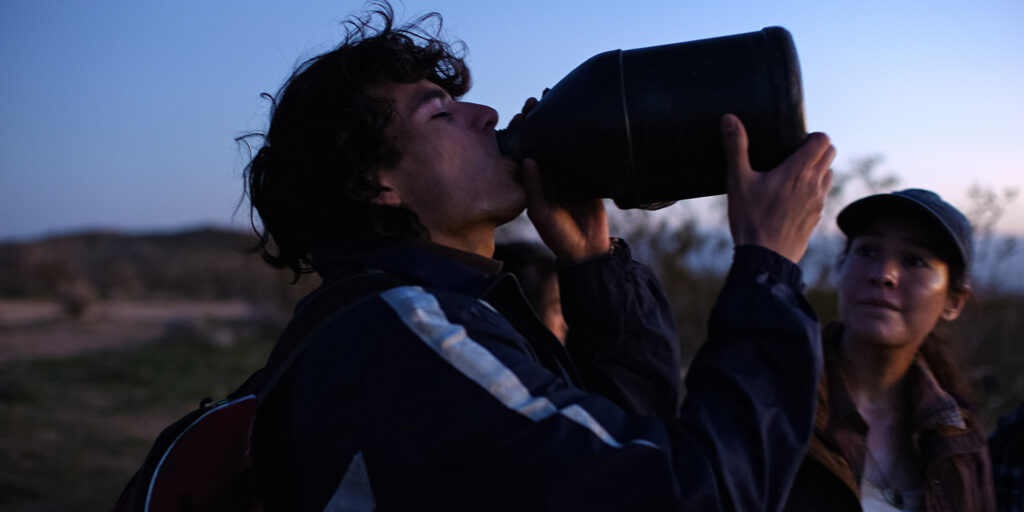
In response, I proposed shooting the first shot at magic hour so we could showcase the few angles of Joshua-tree-free land we found in the Mojave. The location is a character in the film and it deserved a spotlight. This also served a very practical purpose: filming that shot as we both envisioned would require an intricate lighting set-up that would be different from our main design.
Dalton and I debated if this would be kosher. I knew we could finesse things in post shooting in ARRIRAW with the Alexa 35, but we couldn’t risk taking people out of the story. I couldn’t tell if I was lobbying for the magic hour shot more out of practicality or story. Both were compelling arguments, but I feared asking too much of our audience.
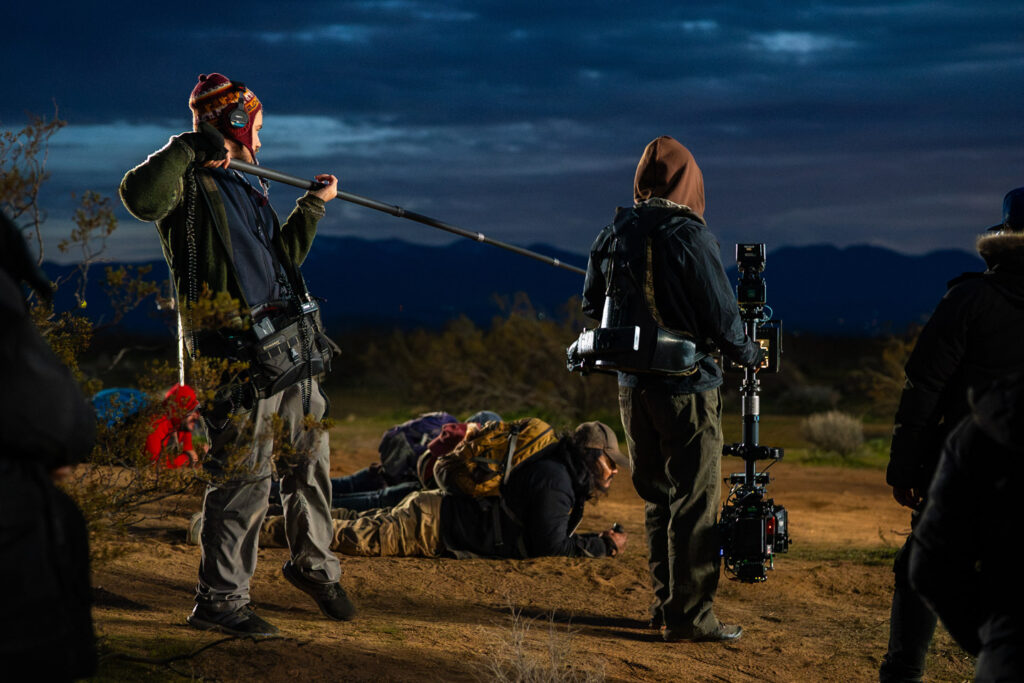
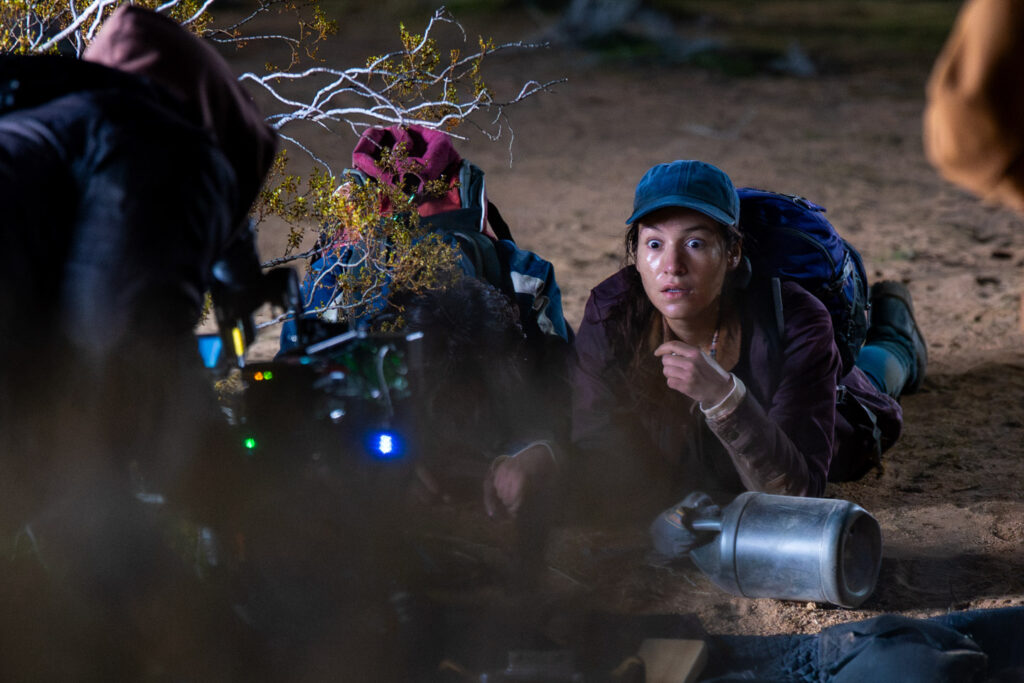
Before heading back to set, I put the opening Steadicam shot and their POV of the Border Patrol car arriving into DaVinci Resolve with a very quick grade. As we feared, it wasn’t ideal. Dalton wisely suggested we begin our day shooting our heroes crawling on the ground in the matching magic hour light from that first shot. This extra clip would ease the transition to full night. In post, we added clouds on the top left of the night sky for Border Patrol’s arrival to better connect the shots.
The Right Tools for the Job
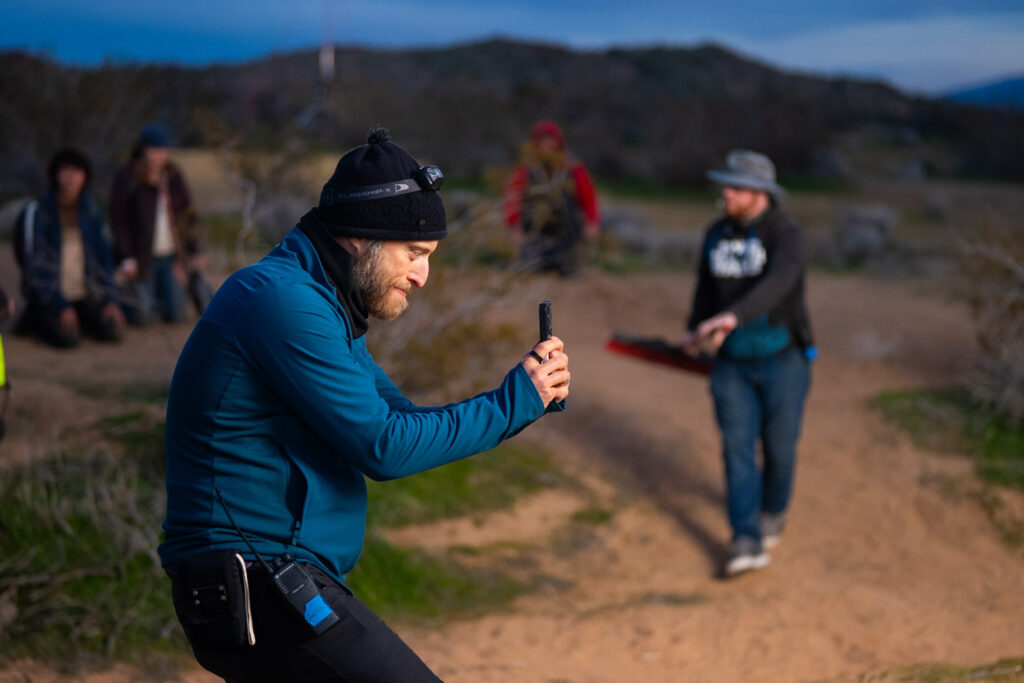
After a last-minute Steadicam Operator swap, we found ourselves with an opportunity to utilize Loren Hamilton’s ARRI Trinity 2. We subsequently designed a shot worthy of the technology by starting on the ground and going up to our leads to open the film. Dalton initially expressed apprehension starting the film with such a long move, but we compromised by trimming the start of the shot.
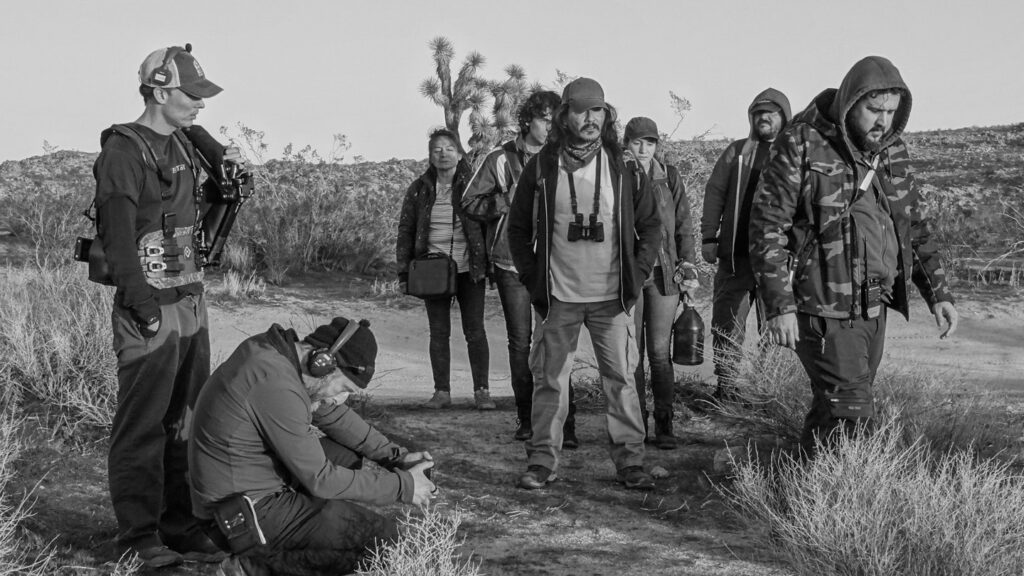
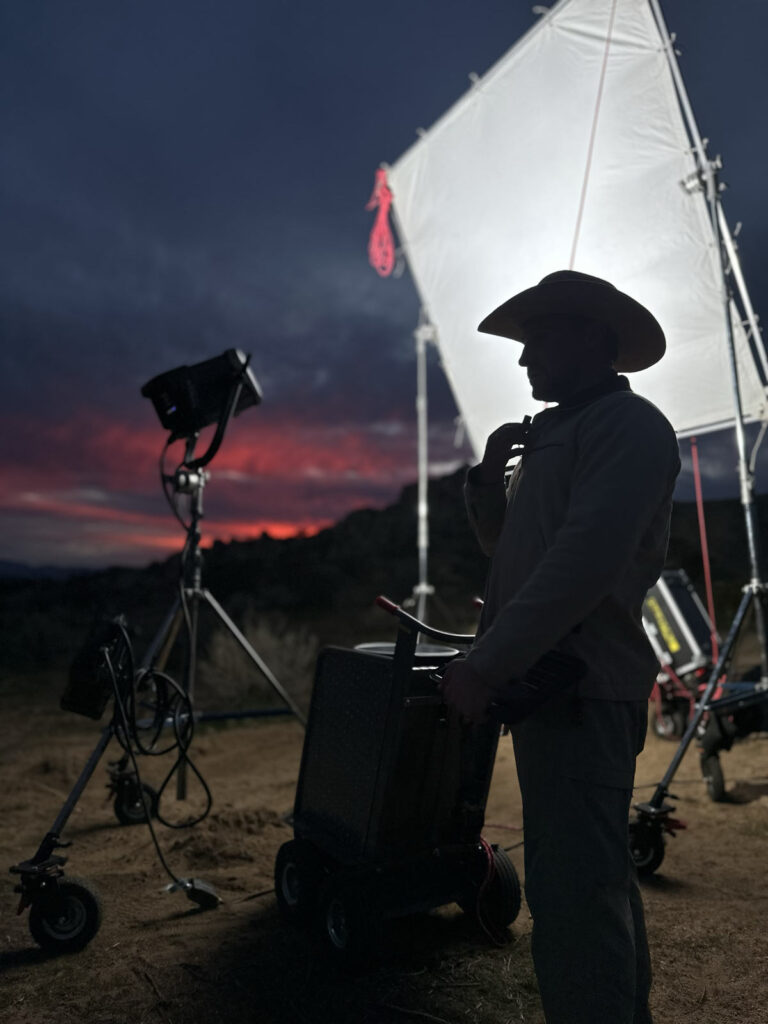
There was no debate that we needed a condor with a high powered light to key from a distance and illuminate a large swath of desert land. As an early Aputure adopter (I ordered my first Light Storm LS 1c from B&H on 7/25/16), I’ve been eagerly anticipating a chance to use the relatively new Storm XT52. Dan Colmenares, who I met back in 2013 when he worked for Stray Angel Films, generously let us demo the light now that he is the Business Development Manager (North America). The XT52 performed brilliantly, once we could strike it.
Uber Couldn’t Even Save Us
There was some confusion surrounding the power needs of the XT52’s ballast. While it can function on 110V, the output is limited to around 3000W, in order to get full output, it requires 220V, which is rare for LEDs. Dan later explained that this allows a much smaller power supply/control box thereby saving a lot of weight. Unfortunately, this wasn’t taken into account when making the distro order and being far from town on a Saturday created a dire situation.
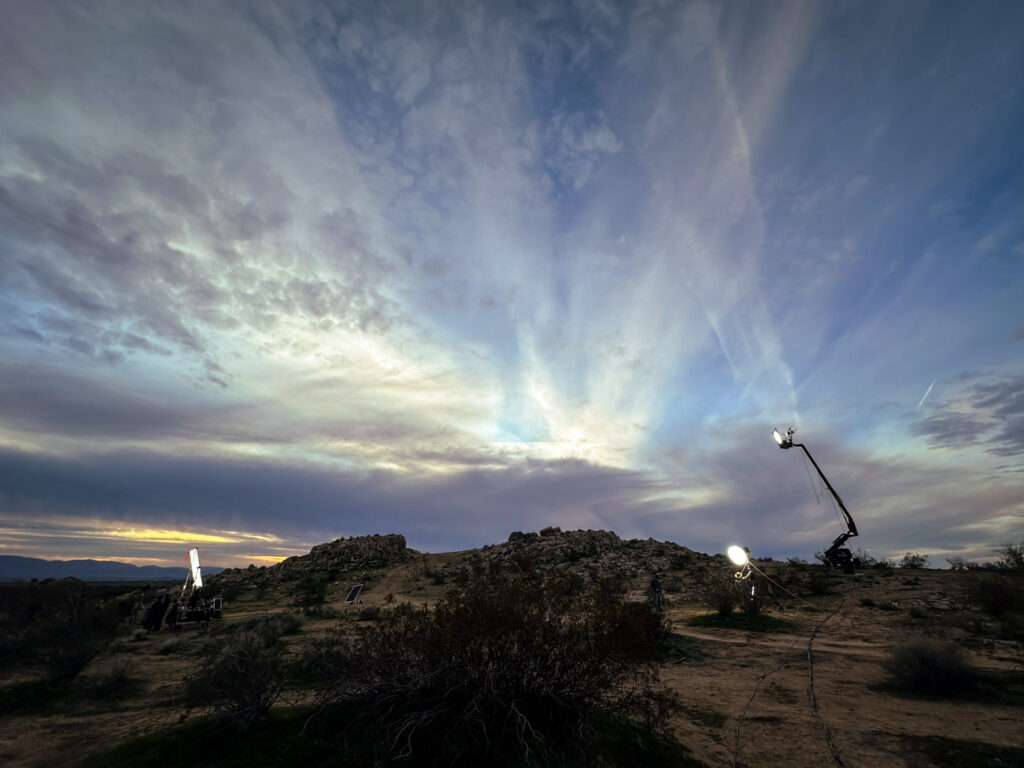
For maximum efficiency, we requested that FM Grip & Lighting send the gear from their San Fernando warehouse in an Uber so we’d have two vehicles meeting somewhere in the middle. Staying on schedule would be impossible without a quick fix. Crew call time was 2:30pm with first shot due close to sunset at 5:14pm. Luckily that first shot didn’t require the condor, but we needed the rig functional for our second shot around 5:45pm.
I eventually caught wind that the Uber driver realized how far he was tasked to drive, cancelled the ride, and tossed the invaluable cable over the fence of the now unoccupied rental house. Dalton tried reasoning with him in Spanish, but it was impossible. In the end, our driver, Traber Schroeder, adjusted his packed schedule of transporting cast and crew to retrieve the cable. We somehow avoided a tragically long delay as a result. If this had happened on a weekday with rush hour traffic, then we would’ve been screwed.
Getting the Money Shot
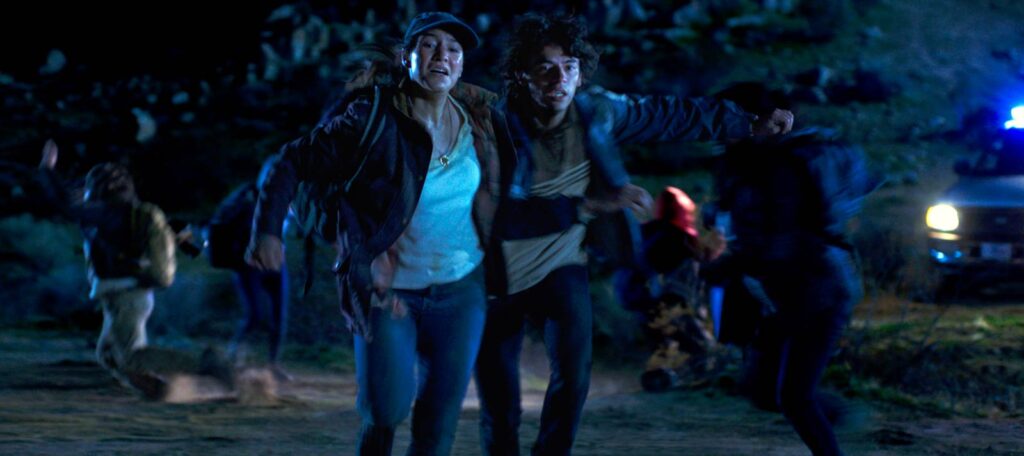
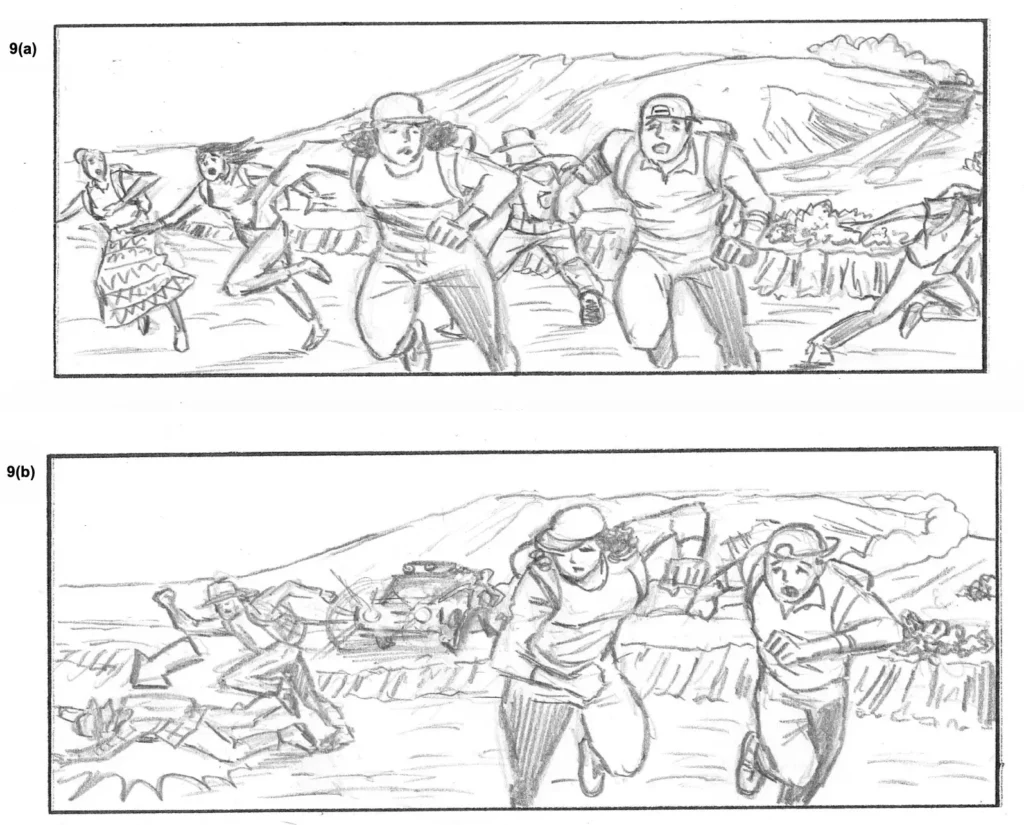
The shot of the Border Patrol car speeding to camera that is reminiscent of the boulder chasing Indiana Jones required many ingredients. Aside from the coordination required to execute the suspenseful extended take, we needed to ensure the safety of our cast and crew. At call time, the stunt team dug wide trenches to bury crash pads to cushion the blow of falling actors.
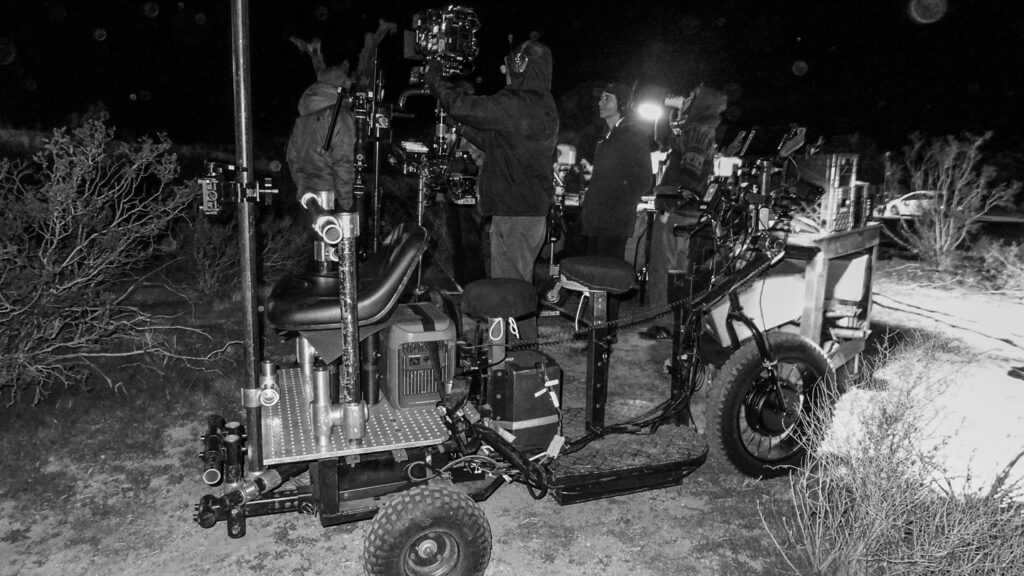
A few days before the shoot, we made another critical adjustment: enlisting my longtime collaborator Andrew Baxter to bring his Cine Trike. We were pretty set on a grip-powered rickshaw, but the ease, safety, and speed that Baxter Camera Works could provide made more sense for the multiple chase sequences. Having the electric motor to instantly propel the camera fast enough so the actors could run full speed added to the tension and allowed the timing to work out exponentially better than otherwise possible.
I absolutely love the car shot. Watching it unfold on the monitor, I could see the storyboards coming to life on camera exactly as imagined. Some shots remain relevant on one’s reel indefinitely, and I suspect this will be one of them.
Fix It in Prep
Working with a Director who is also an accomplished Cinematographer made my life simpler. Dalton knew what’s possible and what’s not, but that added an immense amount of pressure particularly with the shot I just mentioned. Expectations were high and Dalton used personal funds to finance this production so I didn’t want to let him down as a friend and collaborator. He challenged me and elevated my work and I’m stoked to continue working together.
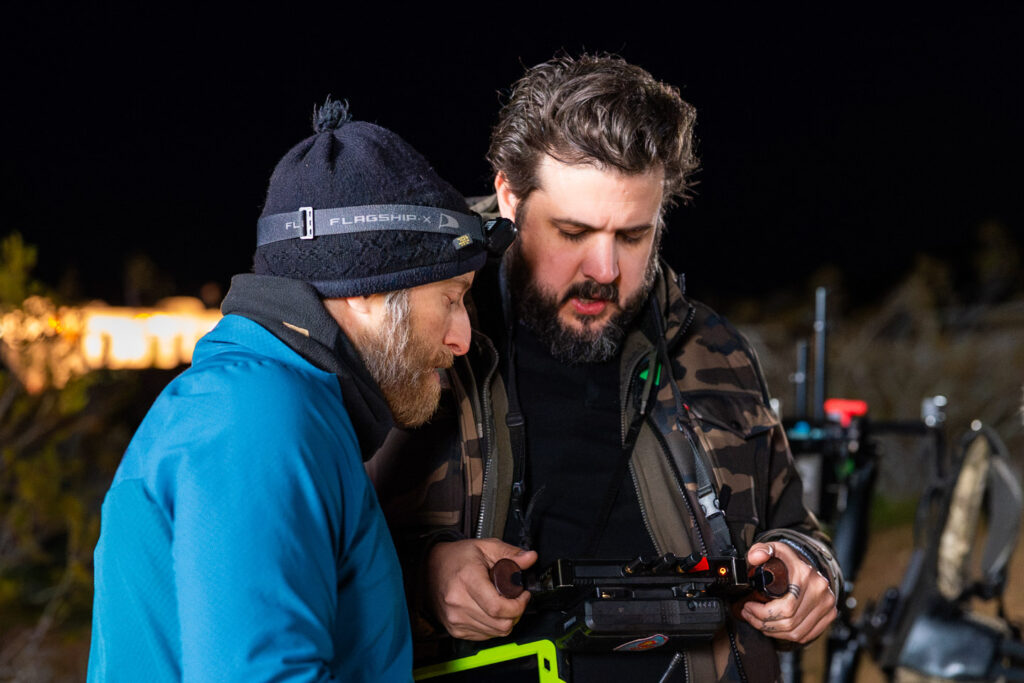
To ensure a smooth and efficient experience on set, we spent lots of time crafting shot lists and lighting diagrams. He worked with a really wonderful storyboard artist, J.C. Baez, to communicate his vision and we didn’t stray far from the plan. It’s rare for me to treat something narrative more like a commercial in that sense, but the amount of TLC that went into all that prep left little room for improvement on set. If we hadn’t taken the time to fully examine the most efficient way to light the scenes, then I would’ve been super stressed in the days leading up to the shoot.
Crafting the Look
Dalton introduced me to the Australian horror film, Razorback (1984) with its hard light and aggressive use of shadow as a stylistic reference. He wanted this to feel more retro/B-movie than the polish of a lot of current horror films. I liked this approach as I knew we didn’t have a ton of time or large crew, which is helpful for night exterior shoots. On Razorback, Dean Semler utilized haze and backlight to help expand what the audience sees.
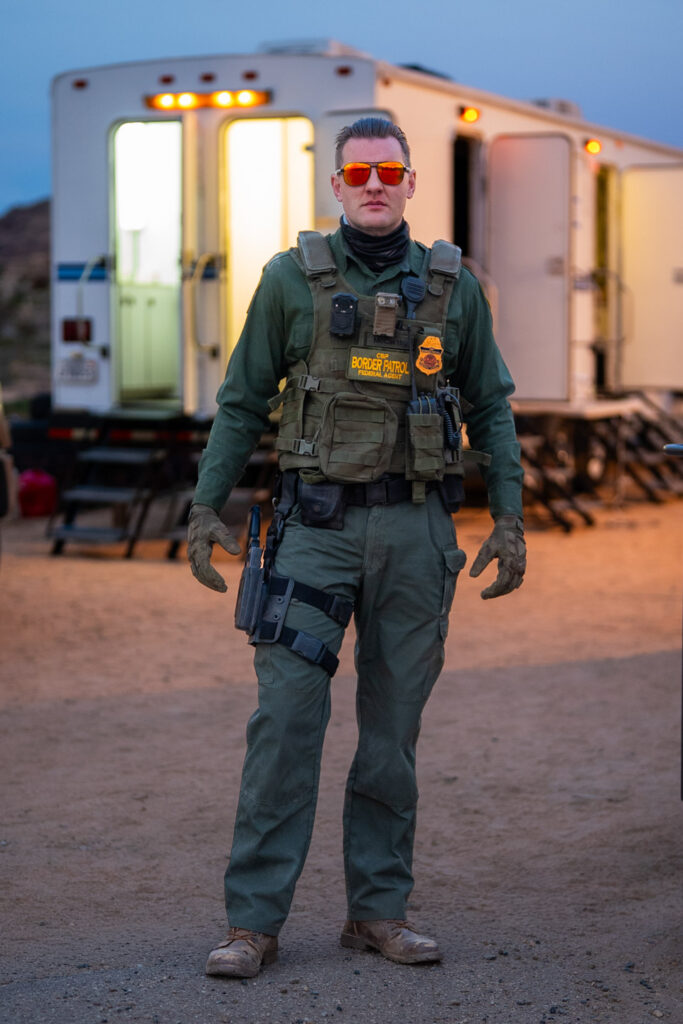
This template was most closely applied when the Border Patrol car arrived. Dalton built our hazer from a design he found on Instagram: a handheld bug fogger running mineral oil. It worked remarkably well. That DIY spirit ran through the whole production. He spent countless hours on eBay assembling the Border Patrol costumes from head to toe.
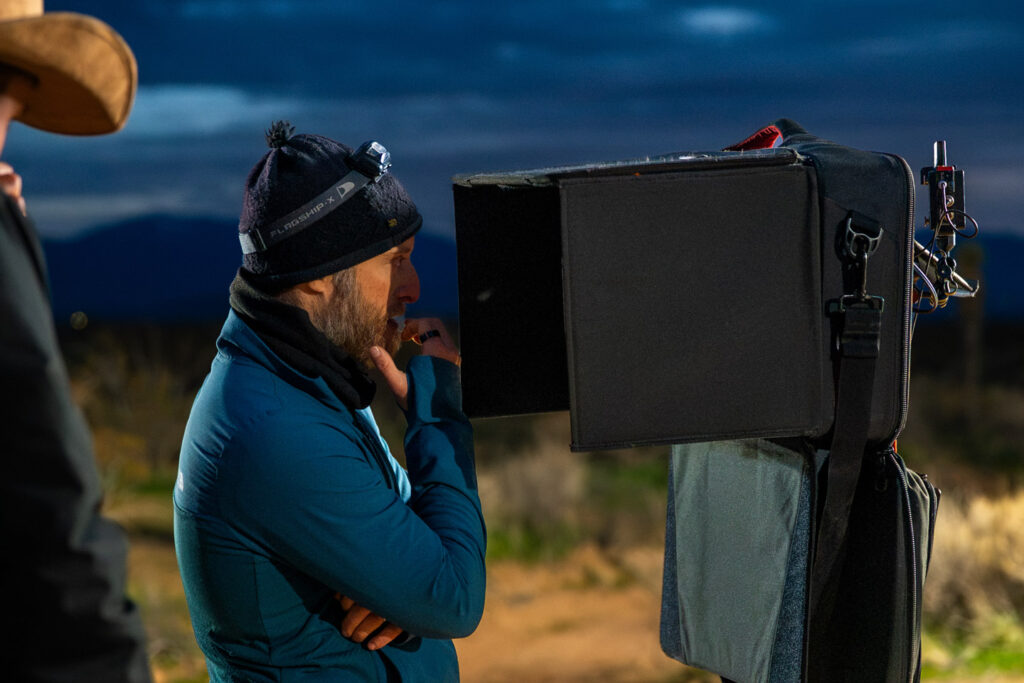
In retrospect, I think I could’ve gone even more extreme with my lighting to match Semler’s award-winning work closer. I don’t like how digital sensors react to hard light, so this was an exercise in using way less diffusion than normal. We used my vintage Zeiss Super Speeds and planned to deliver at 2:1 as it’s nice compromise between full widescreen and Academy aperture.
My initial instinct when I heard the concept was to use my Atlas Orion 2x anamorphic lenses. There would be lots of shots with numerous people in the frame and there’s a historical association with westerns and widescreen in cinema. As a bonus, we’d get killer flares for the car chase reminiscent of horror classics like The Thing (1982) and Alien (1979). I’m happy with our decision to shoot spherical and the Speeds still delivered some beautiful flares.
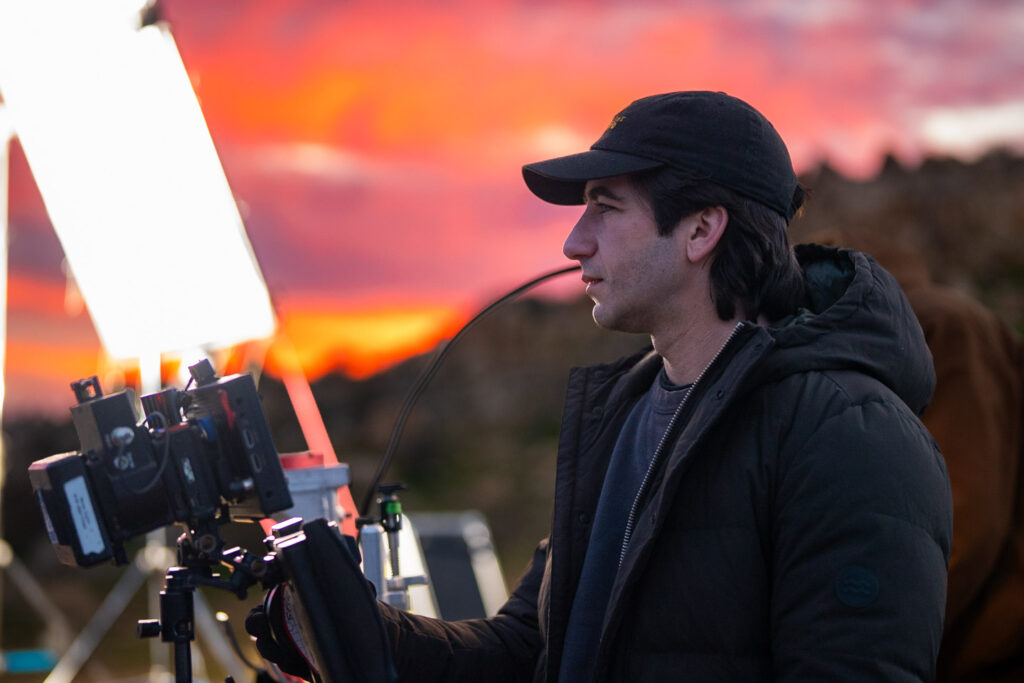
To give the most amount of flexibility in post, we shot ARRIRAW with High Density Encoding at maximum resolution 4.6K 3:2 Open Gate. We framed for 2:1, but kept the entire frame clear just in case we wanted another deliverable for social as a teaser or similar. It also allowed for some slight vertical repositioning, which came in clutch for headroom continuity for the complex opening shot.
When Old School Becomes New
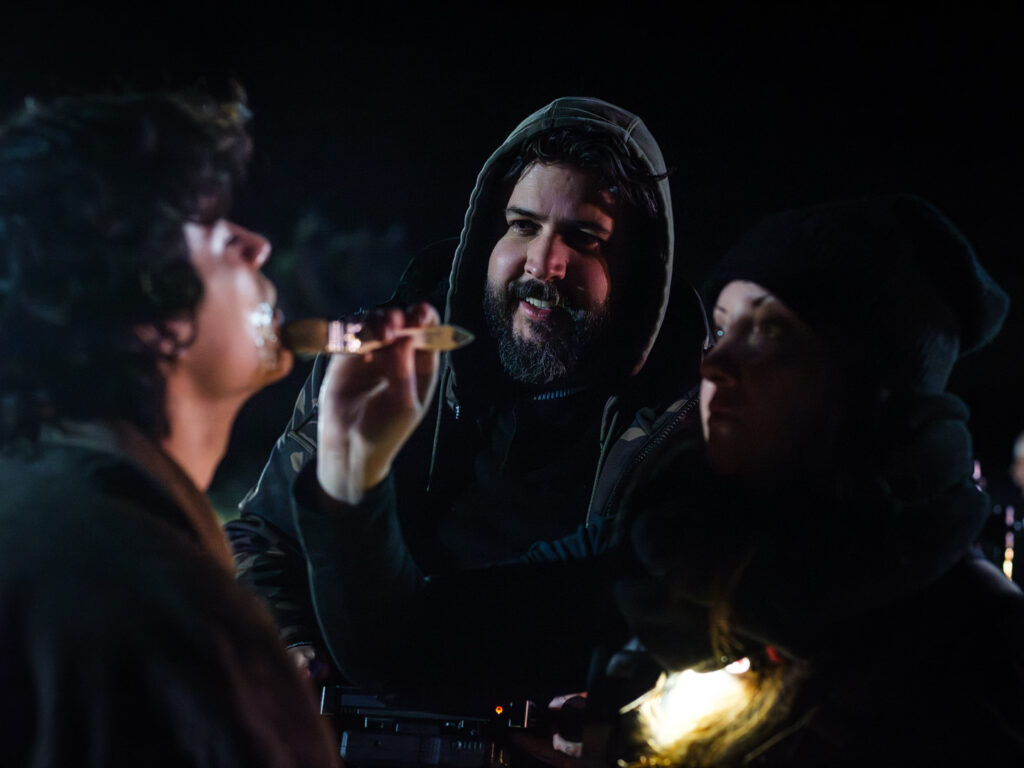
To align with the retro aesthetic, Dalton insisted that we do all the effects practically. He specifically eschewed any use of AI throughout the creative process. We assembled a great team of artists to create the monster’s prosthetics and dedicated a large chunk of our second night to capturing what we needed with a slightly pared down crew.
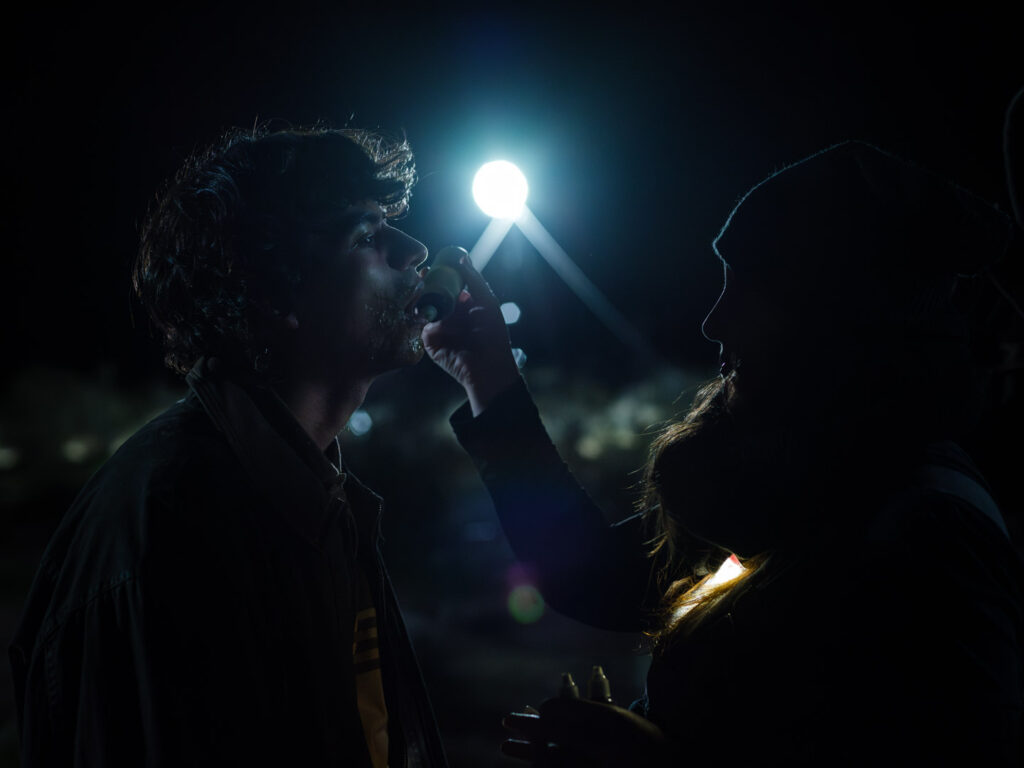
After spending lots of time analyzing the footage, Dalton hired Dillon Andrews to tweak the final creature design digitally using inspiration from what the Russell FX team fabricated. Ultimately, post-production dragged on for months in spite of our hopes for a quick turnaround. We also added stars to the night’s sky in post for thematic reasons.
We look forward to playing more festivals soon to raise the profile of the project and if all goes as planned, we’ll reunite to make the feature version of this soon. Stay tuned!
Crew
Director
Dalton Gaudin — Writer / Producer / Director
Production
Sara Jackson — Unit Production Manager / Associate Producer / Casting Director
Chevy Chen — 1st Assistant Director
Traber Schroeder — Driver / Production Assistant
Soren Blomquist Eggerling — Production Assistant / Camera PA (Day 2)
Ula Hsu — Production Assistant
Norbert Godinez — Production Assistant
Max Lehman — Production Assistant
Camera
Dustin Pearlman — Director of Photography
Loren Hamilton — Steadicam & Trinity Operator
Mike Justin — 1st Assistant Camera
Ryan Magennis — 2nd Assistant Camera (Day 1)
Andrew Baxter — Cine Trike Operator
Emily Payton — BTS
Grip & Electric
Valentin Salembier — Gaffer
Richard Brush — Key Grip (Day 1)
Alejandro Zambrano — Key Grip (Day 2)
Brandon Amaya — Best Boy Electric (Day 1)
Collin Gallivan — Best Boy Electric (Day 2)
Troy Cummings — G&E Swing (Day 2)
Production Design
Rafael Pulido — Production and Costume Design
Oscar De La Rocha — Art Assistant
J.C. Baez — Storyboard Artist
Wardrobe & Makeup
Ching Tseng — Key Hair and Makeup Artist
Ivan Hernandez — Hair and Makeup
Josh Russell and Sierra Spence, Russell FX — Special Effects Makeup Design
Bob Smithson — SFX Contact Lens Tech
Cristina Patterson — Contact Lens Designer
Stunts
Cody Gilbert — Stunt Choreographer
Anthony Rico — Set Medic
Sound
Sage Bilderback — Production Sound Mixer
Music
David F. Ramos — Music Composer
Olivia Schlichting — Music Consulting
“Ay de Tí” — Written and Performed By David F. Ramos & Frida Delgado Pons
Kevin Jackson — Trombone Player
VFX
Dillon Andrews — VFX Creature Design and Animation
Thompson Conradi Jr. — VFX Compositor
Tom Heddell — On Set VFX Supervisor and Consultant
Abhimanyu Tanwar — VFX Title Transition & Shadow Composite
Post
Max Berger — Editor
Alexander Lakin — Colorist
Ben Soiefer — Sound Design, Edit, & Mix
Filmograph — Original Title Design
The Valdez — Company Logo Designs
Catering
Madison Mazzeo — Catering & Craft Services
Mitchell Miller — Catering Sous Chef
Cast
Jennifer De Los Santos — Marta
Kevin Corte — Pablo
Pancho Cardeña — Tacho
Scotch Hopkins — Lead Border Patrol Agent
Max Lehman — Second Border Patrol Agent
Arturo Vega — Migrant #1
Mirayda Levi — Migrant #2
Daisy Garcia — Migrant #3