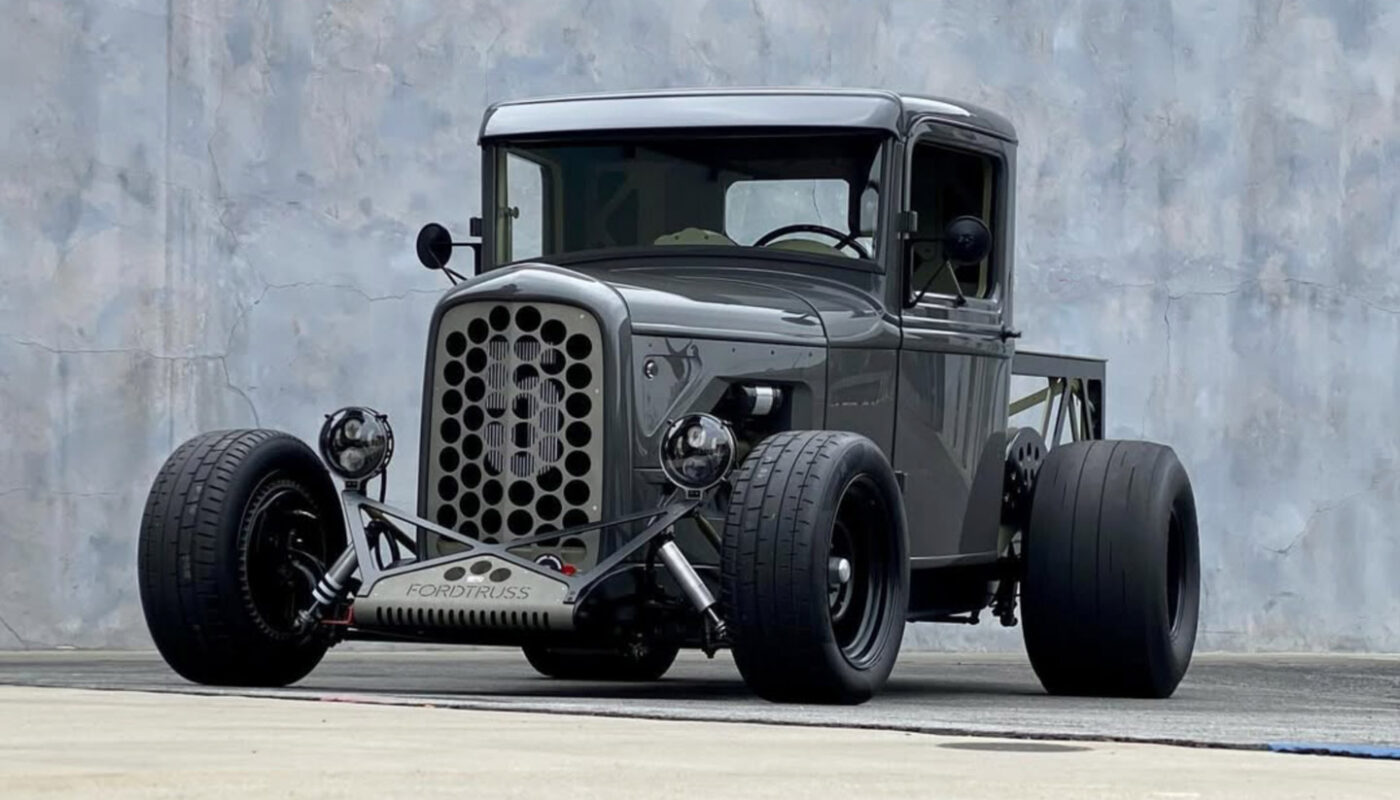
I’ve had the honor of shooting two episodes of Vizcom’s web series, Design Decoded, where writer/director/editor Reza Bird interviews world-class creatives as they demonstrate how the AI-powered design platform integrates into their process. Since last May, we’ve crafted numerous videos for Vizcom. Scott Robertson’s episode wouldn’t be complete without highlighting his spectacular automobile creation, FORDTRUSS.
Andrew Baxter and I have now teamed up on three car shoots in collaboration with his company Baxter Cameraworks. For this one, we wanted a pursuit vehicle solution that didn’t require police escorts so we could move freely through Los Angeles. Andrew believed we could capture great footage without a crane like we used on the Tesla job in July 2023, and he was right. Rigging the Flowcine Black Arm and DJI Ronin 2 to speedrail on his 450HP Porsche Cayenne gave us the flexibility to quickly adjust camera height. While we still had to pull over for tweaks, the smaller crew and footprint proved incredibly effective.
We started with the camera mounted low off the rear of the Porsche to emphasize the FORDTRUSS’s design. Once we had that coverage, we raised the height to feature Scott more prominently. We eventually moved to the front and cycled through a range of angles before wrapping around 8:15 as traffic picked up and the light lost its magic. I operated the remote head on NODO Inertia Wheels, Andrew drove, and Nicolas Danoviz pulled focus.
We used Andrew’s DZOFilm Catta Ace FF 35–80mm T2.9 cine zoom paired with my Sony FX9. Shooting at sunrise around Culver City helped us avoid traffic and gave us that soft, cinematic light. The craziest moment came when a fleet of driverless Waymo cars overtook us. You can spot the first pass at 1:14, and Reza revisits the moment at 4:02.
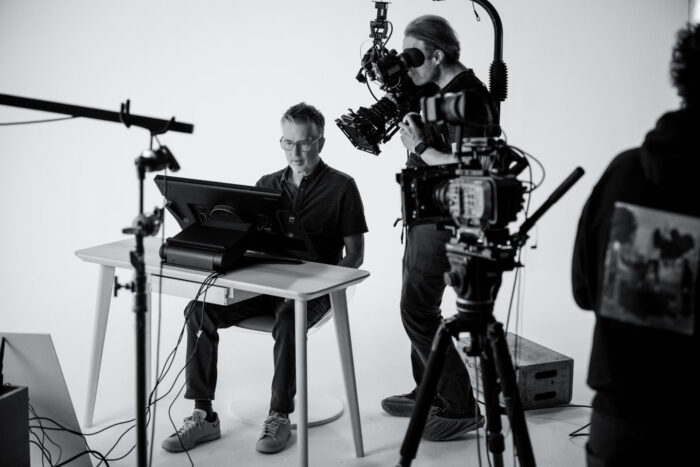
Reza and I had filmed with Scott two months earlier on a white cyc at McNulty Nielson Studios as part of the Vizcom tutorial series. After seeing how he interacted with the platform, we knew we needed a deeper dive into his creative process. For those interviews, I used my Schneider Xenon FF primes wide open at T2.1 for maximum falloff. I love how seamlessly the footage blends together.
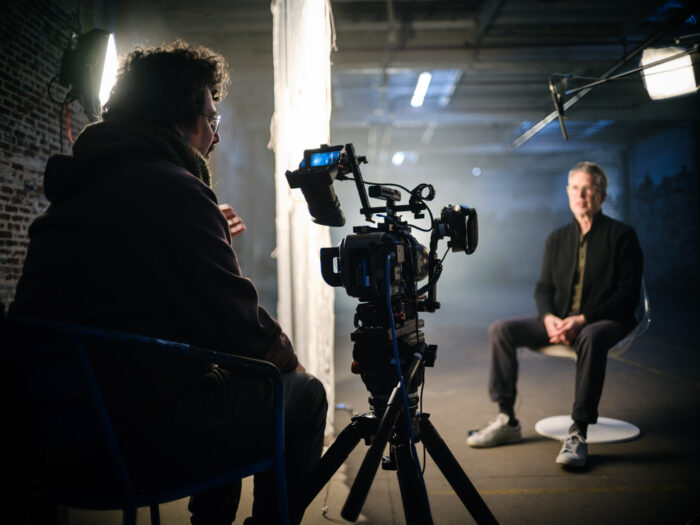
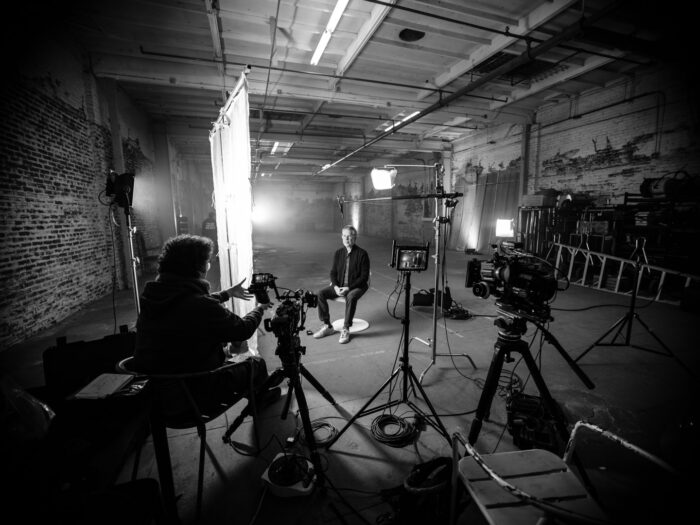
For the first three episodes of Design Decoded, Reza flipped convention by framing the wide shot in profile and placing the close-up closer to eyeline. We initially followed that approach for Scott’s interview at Electric Pony Studios, but ultimately pivoted when it didn’t suit the background. If you’re curious, you can see that earlier framing style in episode 2, which we shot in San Diego.
If you’re curious how AI and Vizcom can influence your iteration process, I highly recommend this tutorial we shot with Scott—it’s remarkable what the platform can do.
If you’d prefer to just watch the driving footage, you’ll enjoy this montage that Melissa Kent assembled with a Moby track.
How do you feel about the future of creativity and AI? I’m hopeful there will always be a place for fully human, “organic” filmmaking, but it’s clear AI will continue to flood our feeds. If you haven’t seen it, I highly recommend this episode of Last Week Tonight on the subject.